A monthly meal plan works like a weekly one, just stretched to four weeks: pick every meal for the month before it starts, shop in fewer, bigger trips, and stop making the same dinner decision every single week. The tradeoff is real — one planning session takes longer than a quick Sunday check-in, and you'll lean on your freezer more than a week-at-a-time planner does. But if weekly planning still means picking up the same mental load every seven days, a month of meals decided in one sitting trades one longer session for weeks of not thinking about it at all. Here's how to build a monthly plan that actually survives all four weeks instead of falling apart by week three.
Start With a Skeleton, Not a Full Menu
Trying to pick thirty specific dinners in one sitting is how most monthly plans die in the first hour. Instead, build a skeleton first: assign a meal category to each day of the week, then repeat that skeleton across all four weeks. A simple version might be Monday: pasta, Tuesday: stir-fry, Wednesday: sheet-pan protein and vegetables, Thursday: soup or slow cooker, Friday: pizza or breakfast-for-dinner, Saturday: a new recipe, Sunday: leftovers or a freezer meal. Once the skeleton exists, filling in specific recipes for each week is a much smaller decision — you're choosing which stir-fry, not deciding whether stir-fry night happens at all. This is also what makes a monthly plan realistic to shop for: category-based skeletons repeat ingredients across weeks (rice, onions, a rotating protein), which is exactly what makes buying in bulk worth it instead of just buying more of everything.
Shop in Two or Three Trips, Not Weekly
The whole point of planning a month at once is shopping less often, so build the trips around what actually keeps. Buy shelf-stable and freezer items — proteins, frozen vegetables, grains, canned goods — for the full month in one large trip near the start. Then plan one or two smaller trips mid-month for anything genuinely perishable: fresh produce, dairy, bread. Trying to buy fresh produce for four weeks in a single trip is how a monthly plan turns into wasted vegetables by week two. A useful rule of thumb: if an ingredient survives in the freezer or pantry, buy it once for the month; if it needs to be fresh when you cook it, it belongs in a mid-month trip instead. This two-or-three-trip rhythm is also what keeps monthly grocery costs down — fewer trips generally means fewer impulse items, even though each trip's total is bigger.
Freeze in Meal-Sized Portions, Not Bulk Batches
A monthly plan leans on the freezer more than a weekly one does, so freeze food the way you'll actually use it. One giant container of chili is harder to use on a random Tuesday than four single-meal portions labeled with the date and contents — you end up thawing more than you need or letting the rest sit until it's freezer-burned. Portion soups, stews, casseroles, and cooked grains into meal-sized containers or freezer bags right after cooking, flatten bags before freezing so they stack and thaw faster, and label everything with the dish name and the date it went in. Most cooked meals hold up well in the freezer for two to three months, which comfortably covers a four-week plan with room to spare. The extra ten minutes this takes at the end of a cooking session is what actually determines whether week four's meals still taste good, or just technically still exist.
Build In a Flex Week
No monthly plan survives contact with real life without some slack built in. Reserve one week — usually the last of the four — as a flex week made up of whatever didn't get used: leftover freezer portions, ingredients that didn't get cooked on schedule, and one or two genuinely easy backup meals. This does two things at once: it absorbs the inevitable week where plans changed (a sick kid, a canceled dinner, a late night that turned into takeout), and it uses up food that would otherwise go to waste at the end of the month. Treat the flex week as part of the plan from day one, not a failure state you're avoiding — a monthly plan without one tends to break the first time something unexpected happens, which is basically every month.
MyCookingList's free plan lets you build one week at a time. Premium unlocks planning multiple weeks ahead — which is exactly the multi-week skeleton this guide walks through, so you can lay out the whole month's structure once and fill in specific recipes week by week without starting over.
Try MyCookingList FreeFrequently asked questions
Is a monthly meal plan cheaper than planning weekly?
It can be, mainly because fewer shopping trips means fewer opportunities for impulse purchases, and buying shelf-stable staples in bulk is usually cheaper per unit. The savings come from shopping less often, not from the meals themselves costing less.
How far ahead can I actually plan meals?
Most people can comfortably plan four weeks at a time using a skeleton and a stocked freezer. Beyond that, fresh ingredients and family schedules both become harder to predict accurately.
Do I need a big freezer to do monthly meal planning?
A standard fridge freezer works for most monthly plans if you portion food efficiently and lean on shelf-stable staples for some meals. A dedicated chest freezer helps if you're cooking for a large family, but it isn't required to get started.
Related reading
Free download
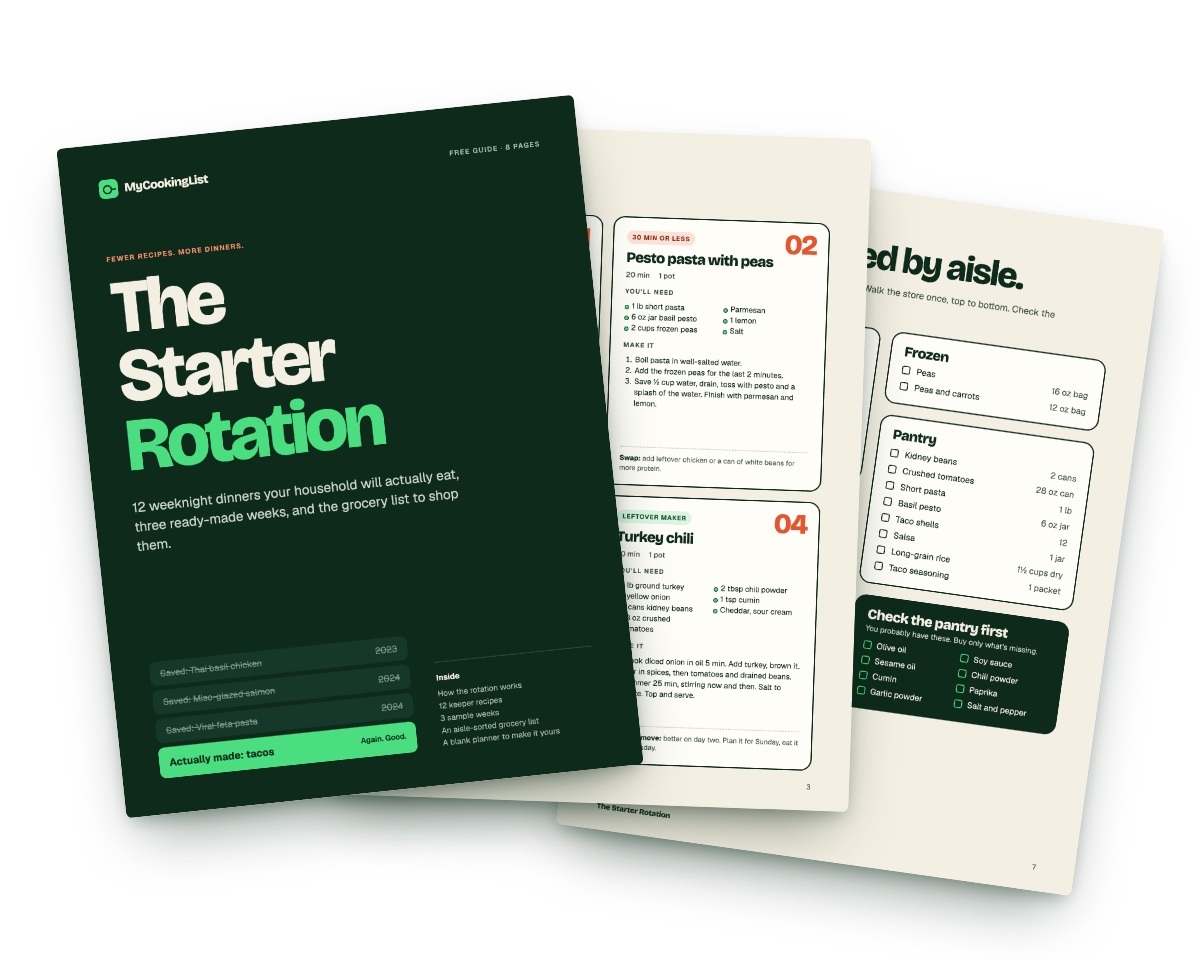
Not ready for a whole month? Start with three planned weeks.
12 keeper recipes, three planned weeks, and the grocery list, sorted by aisle. Eight printable pages you can use this Sunday.